









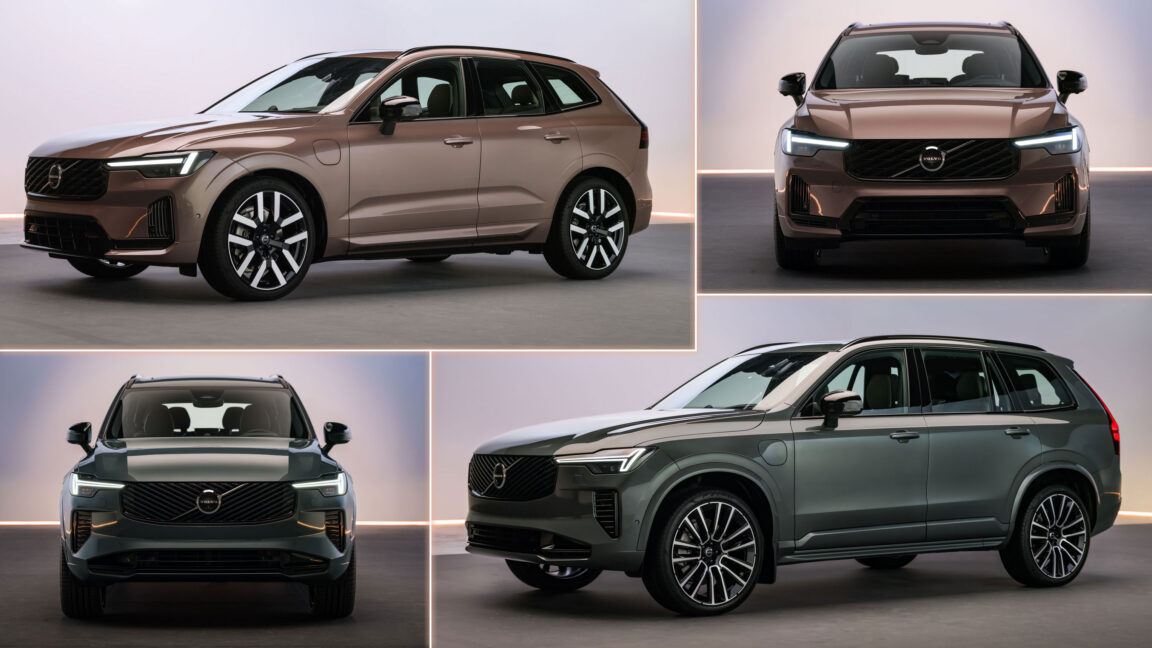
When Volvo originally debuted the current generation of its flagship XC90 back in 2015, the automotive landscape looked entirely different. Product planners envisioned a swift, unyielding transition toward fully electric vehicles, suggesting that internal combustion engines and complex hybrids would soon be a relic of the past. Fast forward to today, and the reality of the global market is far more nuanced. While regions like Europe and China continue to aggressively embrace pure electric vehicles, the critical US market—alongside several others—has shown a distinct preference for a more pragmatic, transitional approach.
Faced with this fractured automotive roadmap, Volvo has made a strategic pivot. Rather than pouring billions into entirely new architectures that might struggle to find uniform global adoption, the Swedish automaker has opted to heavily revise its most popular luxury SUVs. Following a recent media trip to Copenhagen, Denmark, to test the updated vehicle lineup, it is clear that Volvo’s updated 2028 plug-in hybrid (PHEV) models—the XC60 and the larger XC90—are not merely holding the fort; they are redefining what drivers should expect from hybrid technology.
The Evolution of Range: Massive Batteries Change the Equation
While previous iterations of Volvo’s plug-in hybrids offered commendable electric-only ranges suited for short daily commutes, the upcoming 2028 update represents a quantum leap forward. The focal point of this refresh is the introduction of a significantly larger battery pack.
Volvo’s engineering team designed this new energy storage system to tackle the ultimate pain point of early PHEVs: range anxiety. The enhanced battery capacity now delivers enough pure electric range to comfortably cover a couple of days of typical daily driving for the average commuter before ever needing to plug into a charger or engage the internal combustion engine. For many drivers, this means weekday commutes can be completed entirely on zero-emission electric power, while the gasoline engine remains ready and waiting for long-distance weekend road trips.
Subtle Exterior Refinements Meet Modernized Interiors
Aesthetically, Volvo has adhered to the old engineering adage: if it isn’t broken, don’t fix it. The exterior design updates for the 2028 models are intentionally minimal. The XC90, which received a bold styling refresh last year, is now joined by the smaller XC60, which adopts a similar front grille design and advanced matrix LED headlights.
Both vehicles retain the Scandinavian minimalist elegance that has made them runaway commercial successes. However, step inside, and the updates become profoundly apparent:
- Next-Generation Infotainment: Volvo has overhauled the cabin technology, integrating a much faster, more responsive, and visually modern infotainment system that resolves the sluggishness of previous generations.
- Elevated Materials: Interior craftsmanship has been taken a step further, utilizing even more sustainable, tactile, and luxurious materials to create a truly serene sanctuary on wheels.
- Seamless Digital Integration: Improved connectivity and driver-assistance displays ensure that the cockpit feels thoroughly futuristic without sacrificing ergonomic simplicity.
Industry Impact and Market Strategy
Volvo’s decision to supercharge its plug-in hybrid lineup rather than forcing an immediate, 100% EV transition highlights a broader maturity within the automotive sector. As consumer demand for pure EVs experiences growth plateaus in markets like the United States, automakers are realizing that flexibility is paramount.
By offering a PHEV with genuine, day-to-day EV usability paired with the long-range security of a gasoline engine, Volvo is capturing a lucrative sweet spot. It bridges the gap for buyers who are hesitant to fully commit to public charging infrastructure but still want to significantly reduce their daily carbon footprint.
Conclusion
The updated 2028 Volvo XC60 and XC90 plug-in hybrids prove that compromise does not have to feel like a downgrade. By pairing substantial battery upgrades with state-of-the-art interior tech and timeless Scandinavian styling, Volvo has breathed a potent second wind into its hybrid portfolio. For drivers looking for the ultimate bridge between electric efficiency and long-distance freedom, Volvo’s latest strategy shows that the hybrid era still has plenty of miles left to run.